62 modernist housing cases: homes, streets and collective life
A numbered route through building-specific stories, photographs and sources across Japan, Europe, North America, Asia and Latin America.
BUILDING STUDY / NONOALCO-TLATELOLCO
An urban housing district considered through construction archives, lived history and continuing cultural use.
THE BUILDING / ITS STORY
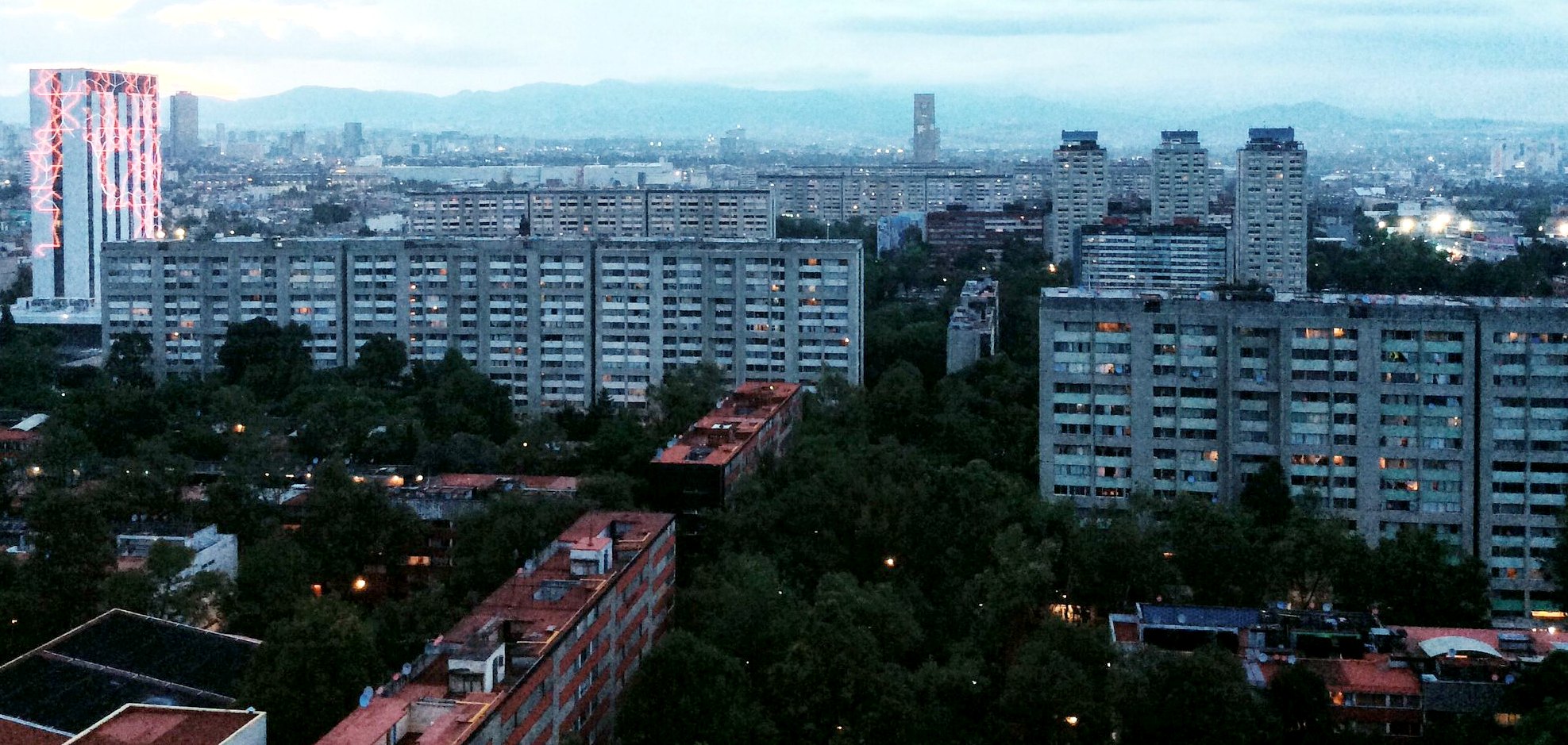
UNAM’s anniversary exhibition and the Academy of Arts identify 1964 with Pani’s Nonoalco-Tlatelolco scheme. The city describes the transformation of former railway land into housing with schools, hospitals and shops: an urban district of housing and public facilities.
CulturaUNAM / CCU Tlatelolco · Exhibition title and curatorial introduction (81–113)
Academia de Artes · Member biography paragraphs1–5 (35–41); gallery captions56/67
Secretaría de Turismo / Gobierno de la Ciudad de México · Tlatelolco moderno; El tratado y la masacre; Terremotos y su costo (95–110)
Independent bilingual summary of the specified source passages; readings of visible form are identified in the text.
UNAM preserves more than 3,000 construction photographs in its Mario Pani archive. Its account also identifies railway workers’ and migrant families’ housing among the redevelopment targets. These records connect the finished scheme with the earlier lives on its site.
Centro Cultural Universitario Tlatelolco / UNAM · Mario Pani collection description (36–38) and public consultation introduction (2–5)
Independent bilingual summary of the specified source passages; readings of visible form are identified in the text.
The district carries the histories of 1968 state violence and the loss of housing in the 1985 earthquake. Its present fabric differs from the original scheme. The selected photographs show surviving homes and landscape, while the narrative recognises subsequent memory as part of its heritage.
Secretaría de Turismo / Gobierno de la Ciudad de México · Tlatelolco moderno; El tratado y la masacre; Terremotos y su costo (95–110)
Independent bilingual summary of the specified source passages; readings of visible form are identified in the text.
The city dates Rodrigo Torres’s Mirador Tlatelolco gallery to 2023, in part of the Coahuila tower’s 24th floor. Architecture and design exhibitions interpret Pani’s work. Public access concerns this specific gallery space within the residential building.
Secretaría de Turismo / Gobierno de la Ciudad de México · Article body paragraphs1–5 (69–74)
Independent bilingual summary of the specified source passages; readings of visible form are identified in the text.
Pablo Landa’s exhibition Mario Pani. Arquitectura en proceso offers a way to revisit housing including Tlatelolco. Museo Amparo’s account of its 2016–17 presentation frames design, construction, transformation and reinterpretation as social relationships.
In a 2016 interview, Landa describes combining photographs with family albums and video interviews from residents of Pani’s housing estates. Previously unshown presentation material and plans held as negatives and slides at Tecnológico de Monterrey also appeared. His discussion names Tlatelolco; this curatorial method invites comparison between the planned city and residents’ memories.
Museo Amparo · Independent summary of identified source passages.
Arquine / Alejandro Hernández Gálvez interviewing Pablo Landa · Independent summary of identified source passages.
Independent bilingual summary of the cited passages; reading scopes and original publications accompany the sources.
An urban housing district considered through construction archives, lived history and continuing cultural use.
Distinguish planning, completion and later interventions by their documented scope.
CulturaUNAM / CCU Tlatelolco · Exhibition title and curatorial introduction (81–113)
Academia de Artes · Member biography paragraphs1–5 (35–41); gallery captions56/67
Secretaría de Turismo / Gobierno de la Ciudad de México · Tlatelolco moderno; El tratado y la masacre; Terremotos y su costo (95–110)
Centro Cultural Universitario Tlatelolco / UNAM · Mario Pani collection description (36–38) and public consultation introduction (2–5)
Secretaría de Turismo / Gobierno de la Ciudad de México · Article body paragraphs1–5 (69–74)
Editorial review: 2026-10-25