What is modernism? Rethinking the way we live
From composition, continuous space, function and the five points to homes and shared life at Unité, Ashiya Grand Heights and Habitat 67.
BUILDING STUDY / BERLIN-HOUSING-ESTATES
Housing estates combining architecture, urban layouts and landscape to improve living conditions through light, air and green space.
THE BUILDING / ITS STORY
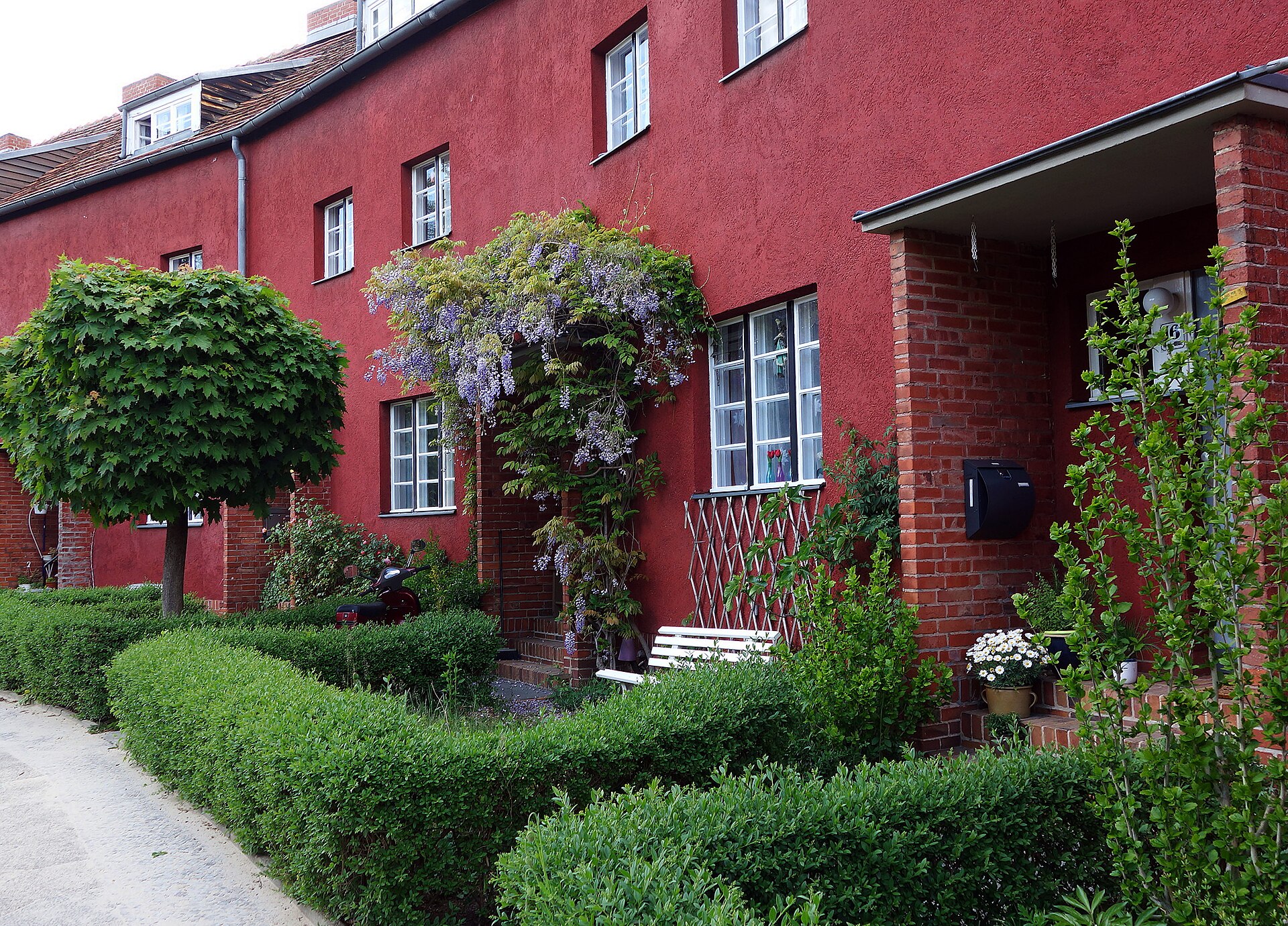
Berlin’s housing reform tied new forms to kitchens, bathrooms, gardens and healthier living conditions. Standardized elements supported economy, while colour and detail prevented monotony. Architecture and social policy were pursued together.
Bezirksamt Neukölln, Berlin · Housing reform aims, kitchen/bathroom provision, gardens, serial components and colour; six estates refers to original 2008 inscription
UNESCO World Heritage Centre · Current description and Outstanding Universal Value: seven components after 2026 extension; integrity, authenticity and management
Independent summary and interpretation of the identified source passages; reading scope is recorded with each source.
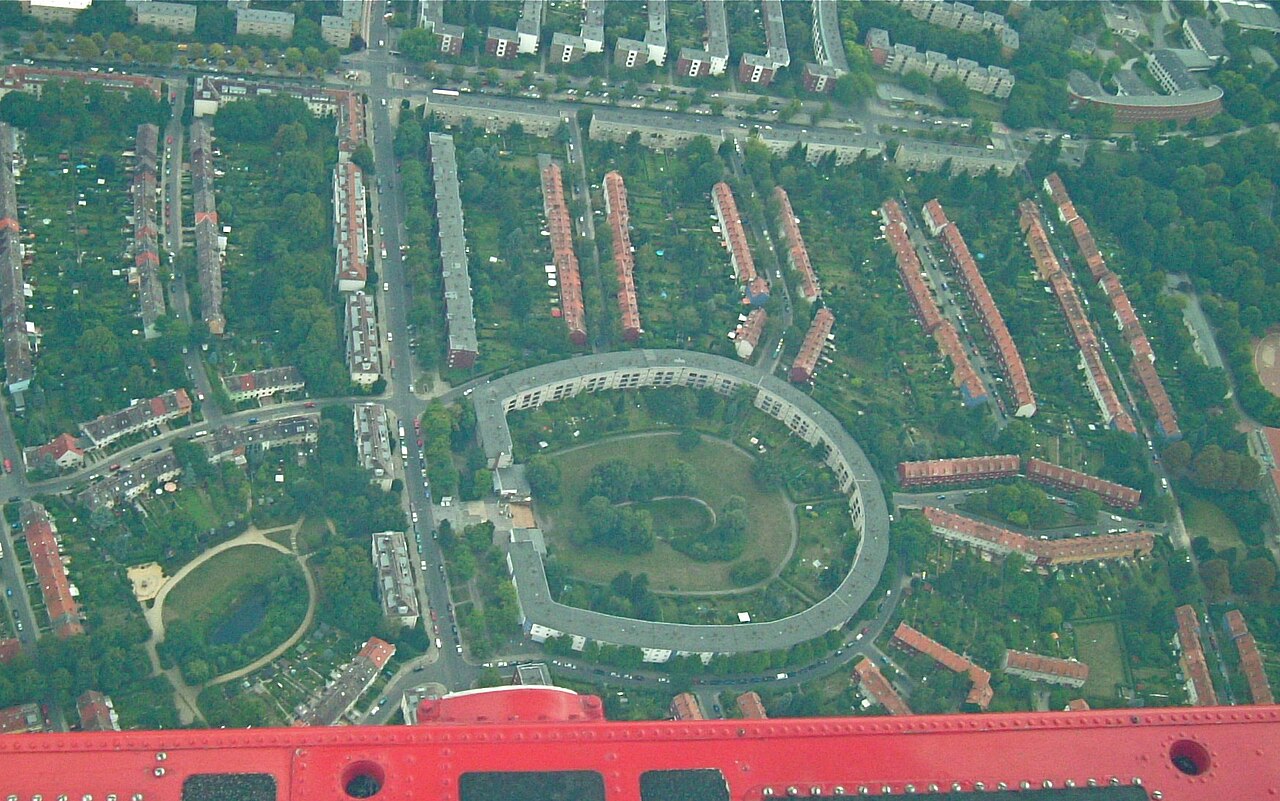
At Britz, the horseshoe encloses an existing pond and shared greenery. Varied building forms connect standardized homes to a specific landscape. The scheme shows modern housing as a relation between dwelling, garden and neighbourhood.
Landesdenkmalamt Berlin · Estate-by-estate summaries, including Taut’s Hufeisensiedlung around an ice-age pond
Bezirksamt Neukölln, Berlin · Housing reform aims, kitchen/bathroom provision, gardens, serial components and colour; six estates refers to original 2008 inscription
Independent summary and interpretation of the identified source passages; reading scope is recorded with each source.
The original six estates were extended to seven in 2026. UNESCO emphasizes their continuing residential use and preserved relationships with green space. Management also addresses climate pressures on gardens and communal landscapes.
UNESCO World Heritage Centre · Current description and Outstanding Universal Value: seven components after 2026 extension; integrity, authenticity and management
Independent summary and interpretation of the identified source passages; reading scope is recorded with each source.
Added in 2026, Waldsiedlung Zehlendorf was built for GEHAG in 1926–1932 by Bruno Taut, Hugo Häring and Otto Rudolf Salvisberg. Apartments and terraced houses connect with shops, a station arcade and green space; each home has an outdoor place such as a balcony, loggia or garden. Landscape work by Leberecht Migge and Martha Willings-Göhre was treated as equal to the buildings. The estate links housing in a forest setting with everyday transport and shopping.
長谷川大/世界遺産データベース · Read the public overview, history, component descriptions and heritage-value sections. Inscription scope and chronology were checked against UNESCO and the Berlin Heritage Authority.
Landesdenkmalamt Berlin · Read the dated 26 July 2026 announcement, decision, design/client roles, construction period, outdoor rooms, landscape design, resident participation and original six-estate list. Despite the retained prospective title, the opening body reports the inscription decision.
Deutsche UNESCO-Kommission · Read the inscription/extension fields, the Zehlendorf outdoor-space passage and all seven estate headings. This official German UNESCO Commission article includes statements by Berlin heritage officials.
UNESCO World Heritage Centre · Seven estates as checked in October 2026; distinguish older accounts of six.
World Heritage Mania introduces these estates through criteria (ii) and (iv). UNESCO criterion (ii) recognizes how their planning, architecture, garden design and housing standards became reference points for social housing in Germany and beyond.
Criterion (iv) concerns new urban and building types, technical innovations and design responses developed to improve social living conditions. This offers a way to read housing reform through the connected design of homes, building layouts, gardens and paths.
世界遺産マニア · Independent summary of identified source passages.
UNESCO World Heritage Centre · Seven estates as checked in October 2026; distinguish older accounts of six.
Independent bilingual summary of the cited passages; reading scopes and original publications accompany the sources.
Their significance extends preservation from individual buildings to living environments and social housing ideals.
UNESCO lists seven estates as of October 2026; older descriptions of six require a date.
UNESCO World Heritage Centre · Seven estates as checked in October 2026; distinguish older accounts of six.
長谷川大/世界遺産データベース · Read the public overview, history, component descriptions and heritage-value sections. Inscription scope and chronology were checked against UNESCO and the Berlin Heritage Authority.
Landesdenkmalamt Berlin · Read the dated 26 July 2026 announcement, decision, design/client roles, construction period, outdoor rooms, landscape design, resident participation and original six-estate list. Despite the retained prospective title, the opening body reports the inscription decision.
Deutsche UNESCO-Kommission · Read the inscription/extension fields, the Zehlendorf outdoor-space passage and all seven estate headings. This official German UNESCO Commission article includes statements by Berlin heritage officials.
Editorial review: 2026-10-25